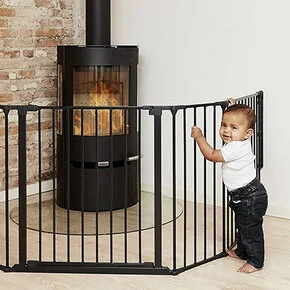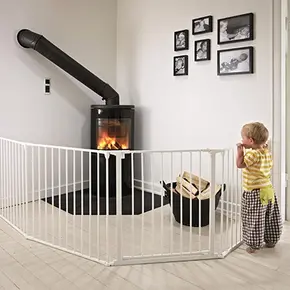
Fireplaces, log burners, and bio-ethanol stoves create all the same hazards as a staircase: heat, hard edges, and constant foot traffic. A dedicated fireplace guard gives you the same peace of mind as a stair gate—especially in open-plan UK homes.
In this guide:
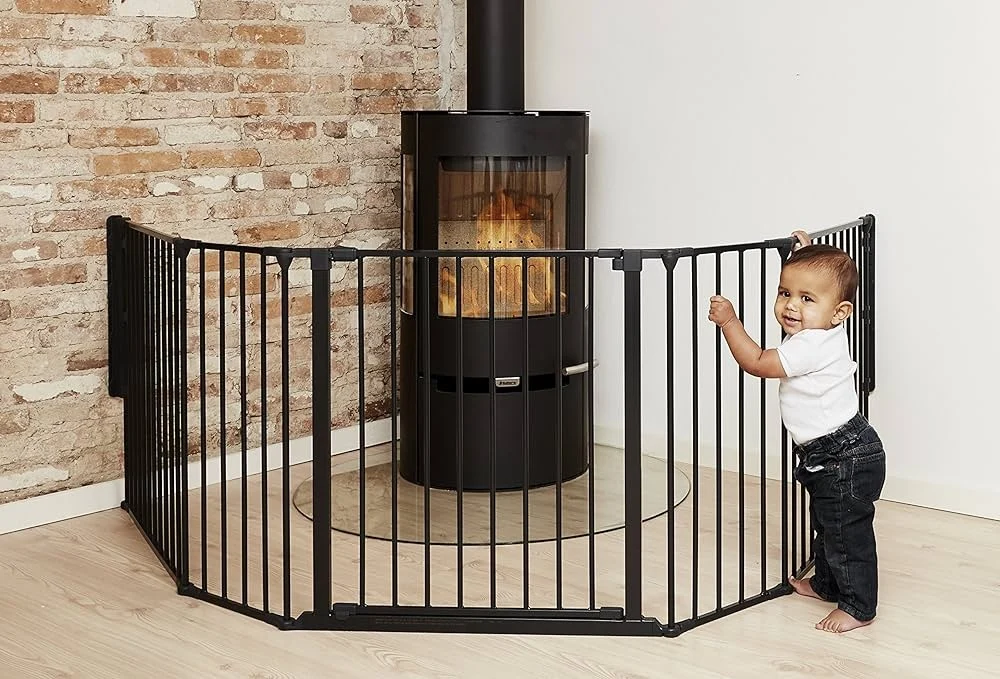
Why you still need a barrier—even with a stair gate
- Radiant heat: Cast-iron stoves remain hot long after the flame dies.
- Sparks & embers: Open fires throw debris that toddlers and pets will chase.
- Uneven hearths: Stone edges are trip points for anyone carrying wood or wine.

Pick the right configuration
- Freestanding panels: Quick to move, best for occasional use or rentals.
- Wall-mounted modular systems: Anchor the first and last panel to the wall for total rigidity—ideal if you already trust products like BabyDan Flex gates.
- Room divider mode: Convert the same system into a playpen or room divider when the stove isn’t lit.

Installation and maintenance checklist
- Measure the full wrap-around distance, including hearth depth and any alcoves.
- Anchor into brick or stone when possible; use heat-resistant wall plugs.
- Add floor protectors or wall saver pads if you’re mounting near painted surfaces.
- Inspect hinges weekly—soot can build up and slow the self-closing action.
- Store the panels indoors during summer to avoid corrosion.
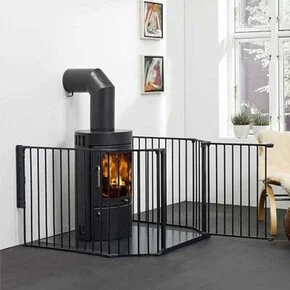
Connect the guard to the rest of your safety plan
Combine your fireplace guard with the stair-gate advice hub so every risky zone feels consistent. Start with Why every home needs a stair gate, then map awkward layouts with advanced layout guide. When you’re ready to buy, browse the room divider and hearth gate collection or drop us a note for a sizing check.