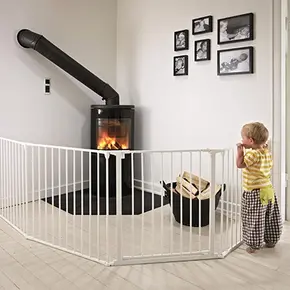
A stair gate keeps toddlers away from drops, but it doesn’t stop them touching hot glass, sharp slate edges, or flickering flames. A dedicated fireplace guard adds that final layer of protection inside UK living rooms with wood burners, bio-ethanol stoves, or open fires.
Full buying guide →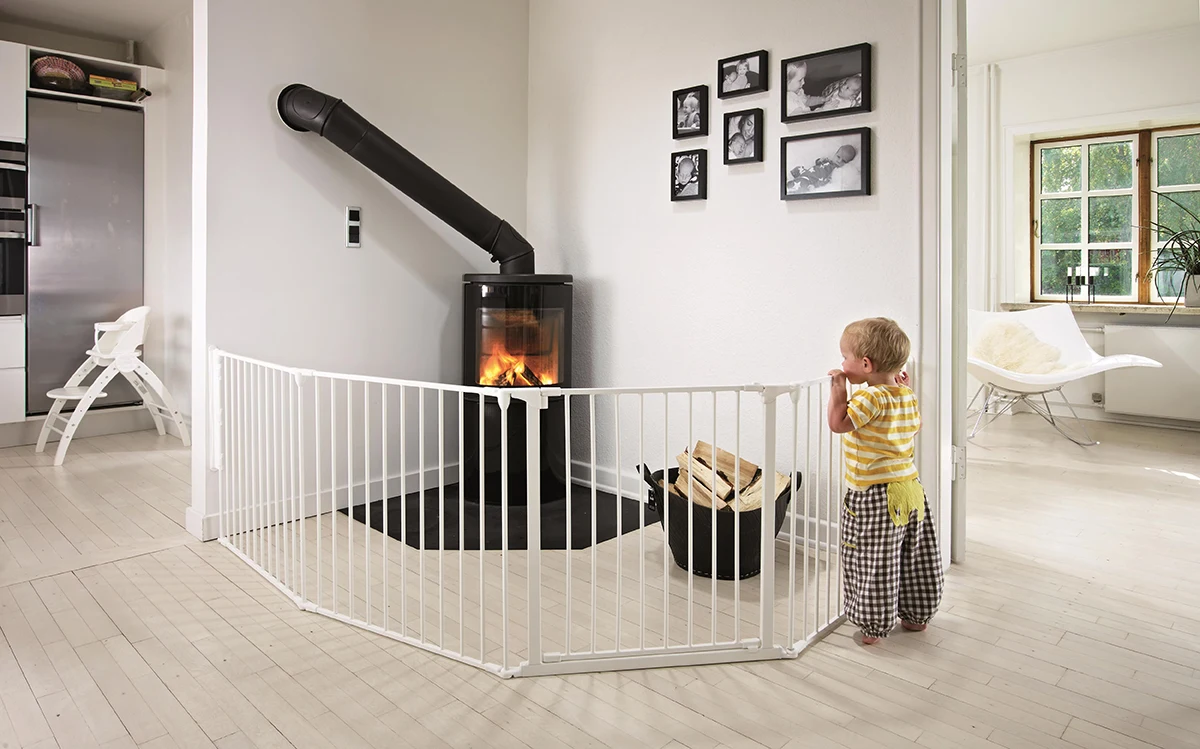
3 reasons a fireplace guard is non-negotiable
- Heat: Stove glass stays hot long after the fire dies. A guard keeps curious hands at least 45 cm away.
- Sparks: Open fires spit embers, which can land on carpets, dogs, or pyjamas.
- Trip hazards: Hearths sit higher than the floor. A guard stops toddlers tripping over the edge.

How it complements your stair gate
- Consistent boundaries: Your child learns that bars mean “stop” wherever they are in the house.
- Flexible layouts: Modular panels can double as a room divider just like a freestanding stair gate.
- Pet control: Dogs can rest nearby without nudging the stove or chewing logs.
When to install (and remove) the guard
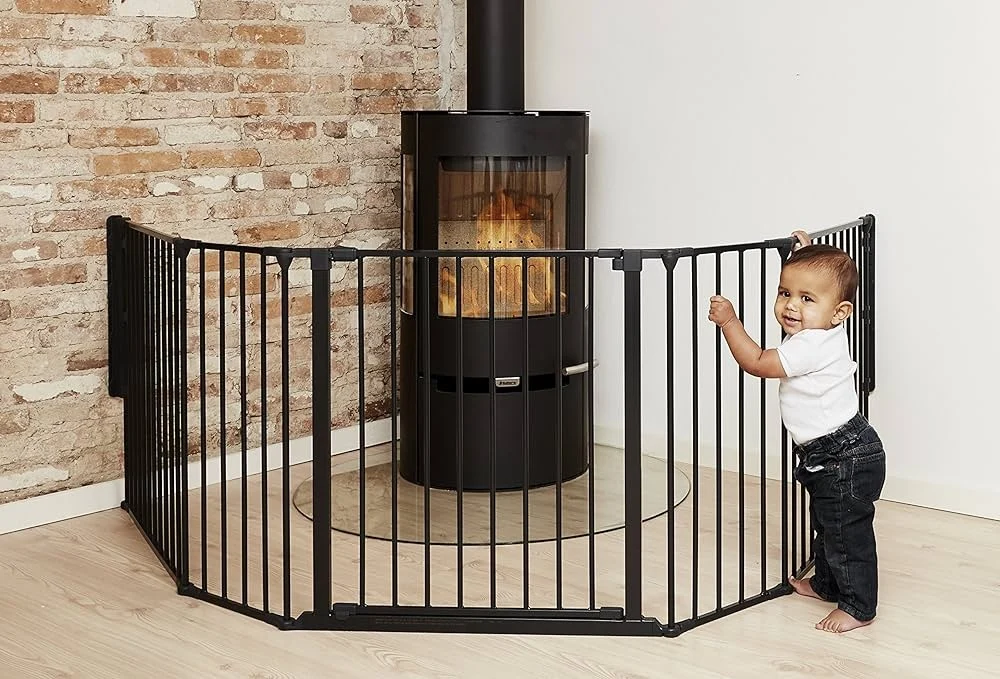
- Install before the first fire of autumn—so the barrier feels normal straight away.
- Leave it up until everyone in the home (kids, pets, guests) understands hot-zone etiquette.
- Store the panels in a dry place over summer to prevent rust and keep fixings tight.
Need inspiration for specific guard layouts? Head back to the fireplace guard buying guide or jump straight to the room divider collection.
Browse fireplace guards →