
Choosing the right baby gate matters just as much as fitting it correctly. Use the checklist below to match a gate to your home, your child’s age, and the way you move through the space.
In this guide:
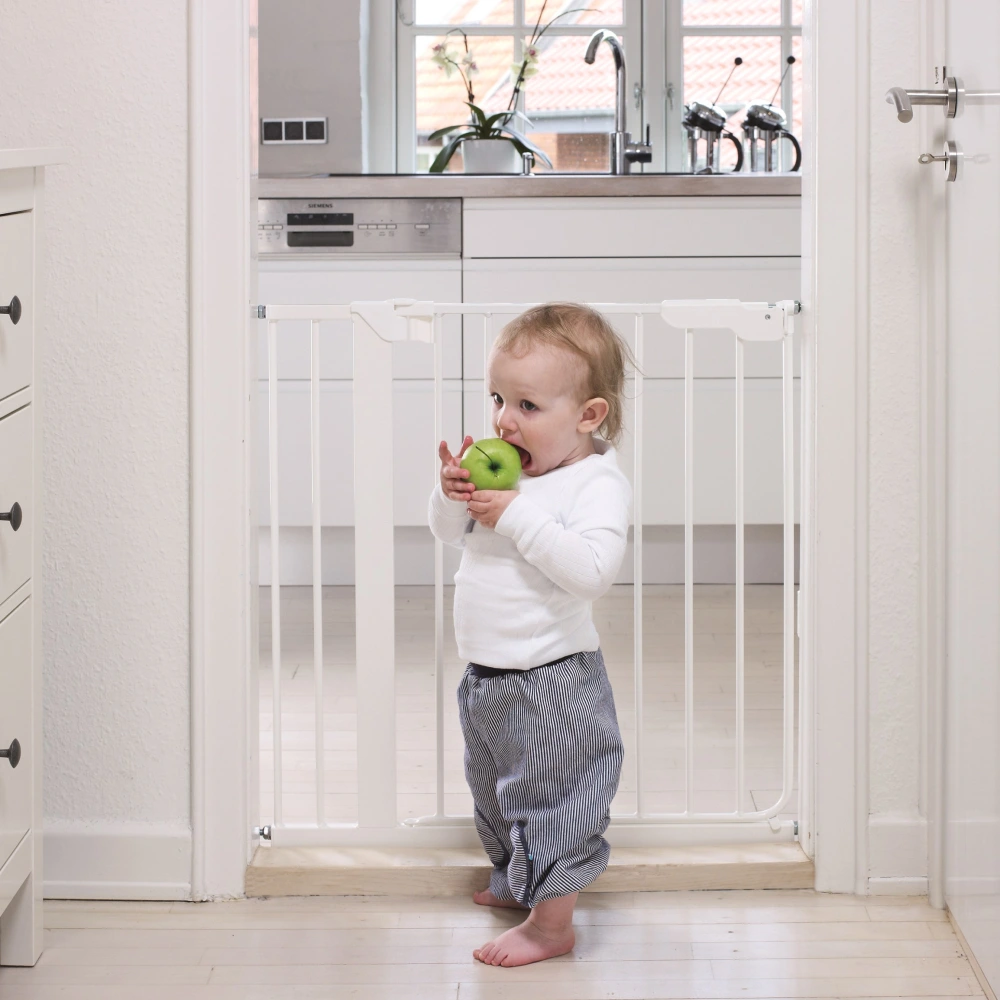
1. Start with the location
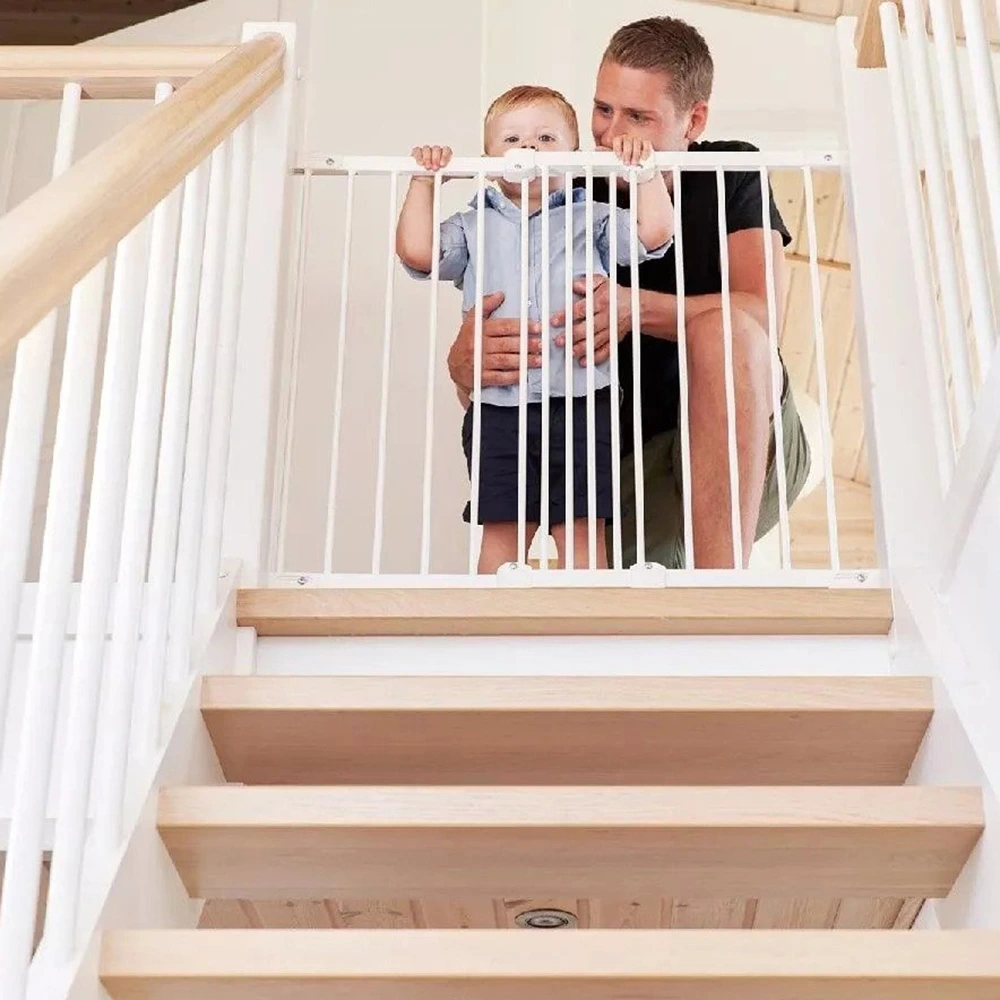
- Top of the stairs: Always pick a screw-fit gate for maximum rigidity and zero flex. Bolting the frame into the wall or bannister is the only way to guarantee it can’t be pushed out of place. Browse screw-fit stair gates.
- Bottom of the stairs: A pressure-fit model can stop adventurous toddlers from climbing. A screw-fit gate still works perfectly here if you want a permanent fix.
- Doorways & room dividers: Either mechanism works. Screw-fit gives you a solid hinge; pressure-fit avoids drilling when you simply want to block access to a kitchen, bathroom, or utility.
2. Pick the right mechanism
- Screw-fit gates: Fixed with screws, they offer uncompromising stability and are ideal for high-risk spots such as the top of the stairs.
- Pressure-fit gates: Wedged between two surfaces without drilling. Handy for temporary setups or rental homes, but note the built-in threshold bar.
- Freestanding solutions: Playpens, room dividers, fireplace guards, or bed rails use similar technology and are useful when you need a wider barrier or a flexible play zone.
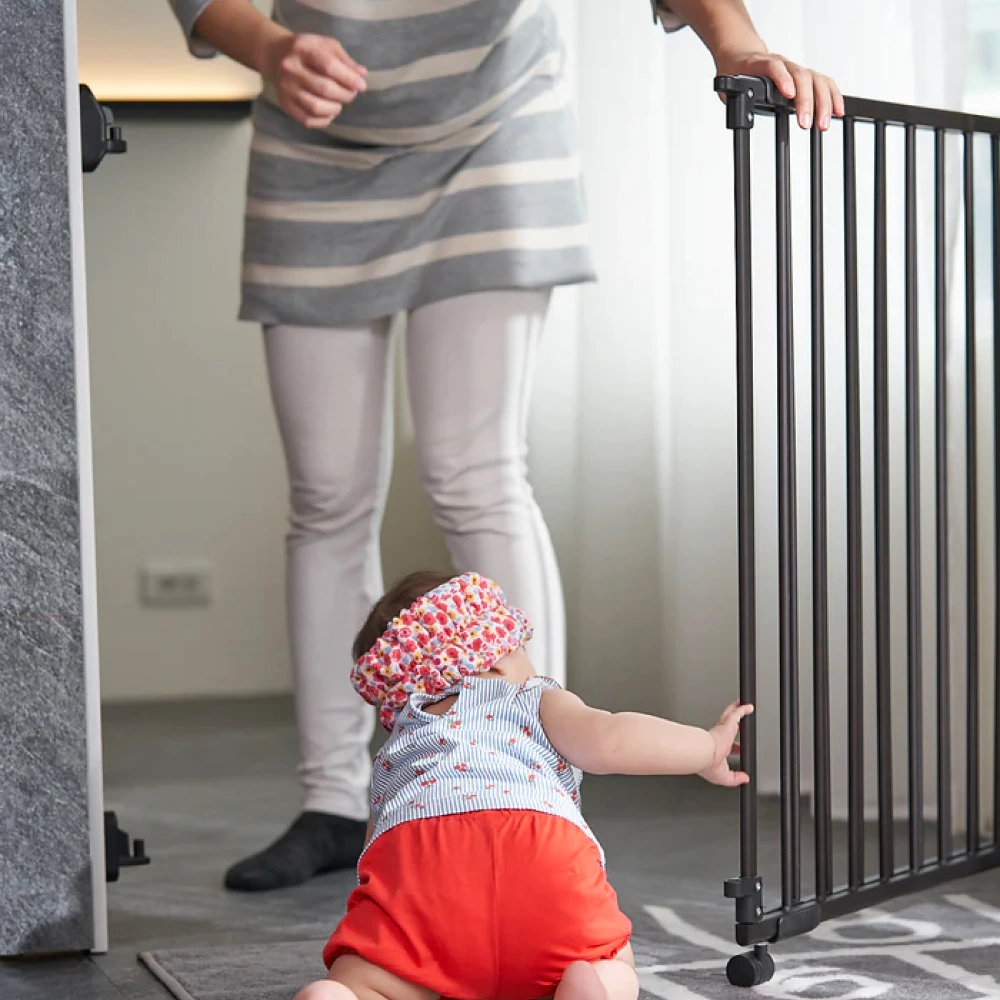
3. Mind the threshold bar
All pressure-fit gates (and some screw-fit models) include a bottom rail to keep tension. It’s a proven trip hazard for both adults and toddlers, especially on stair landings. If you want a completely flush walkway, choose a screw-fit design with no threshold bar.
4. Measure carefully
- Measure the opening width where the gate will sit. Many models are telescopic, but you may need an extension kit for wider spans.
- Double-check the minimum and maximum widths with any extensions attached — manufacturers often quote different ranges for in-reveal versus on-wall mounting.
- Height matters: most quality gates are at least 75 cm tall to stop toddlers from climbing over.
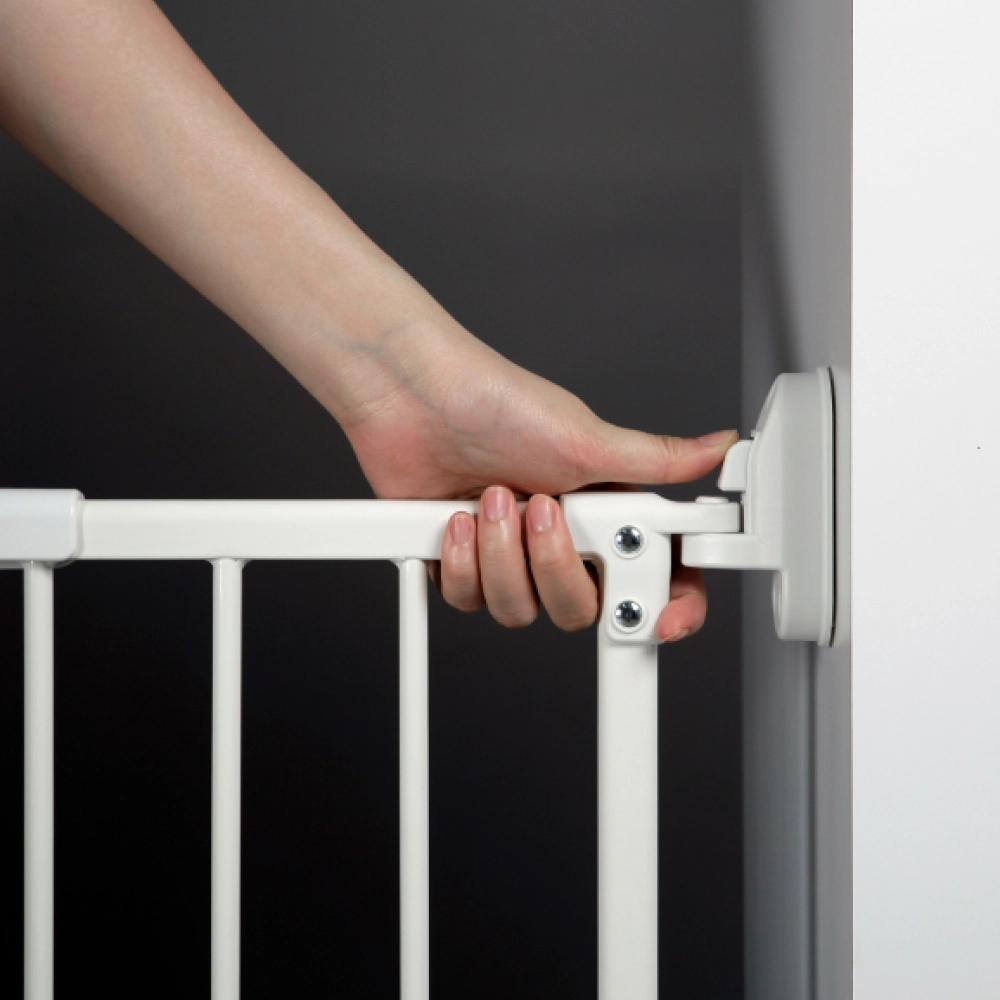
5. Look at the extras that simplify life
Helpful add-ons include:
- Auto-close latches
- One-hand operation (crucial when you’re carrying a child)
- Two-way swing with directional stops
- Adjustable width indicators or built-in spirit levels
- Extra-tall frames for bigger dogs or older toddlers
6. Match the finish to your interior
White and black are the most common finishes, but you’ll also find natural wood or neutral metals. Picking a colour that complements your balustrade or skirting makes the barrier feel intentional rather than temporary.
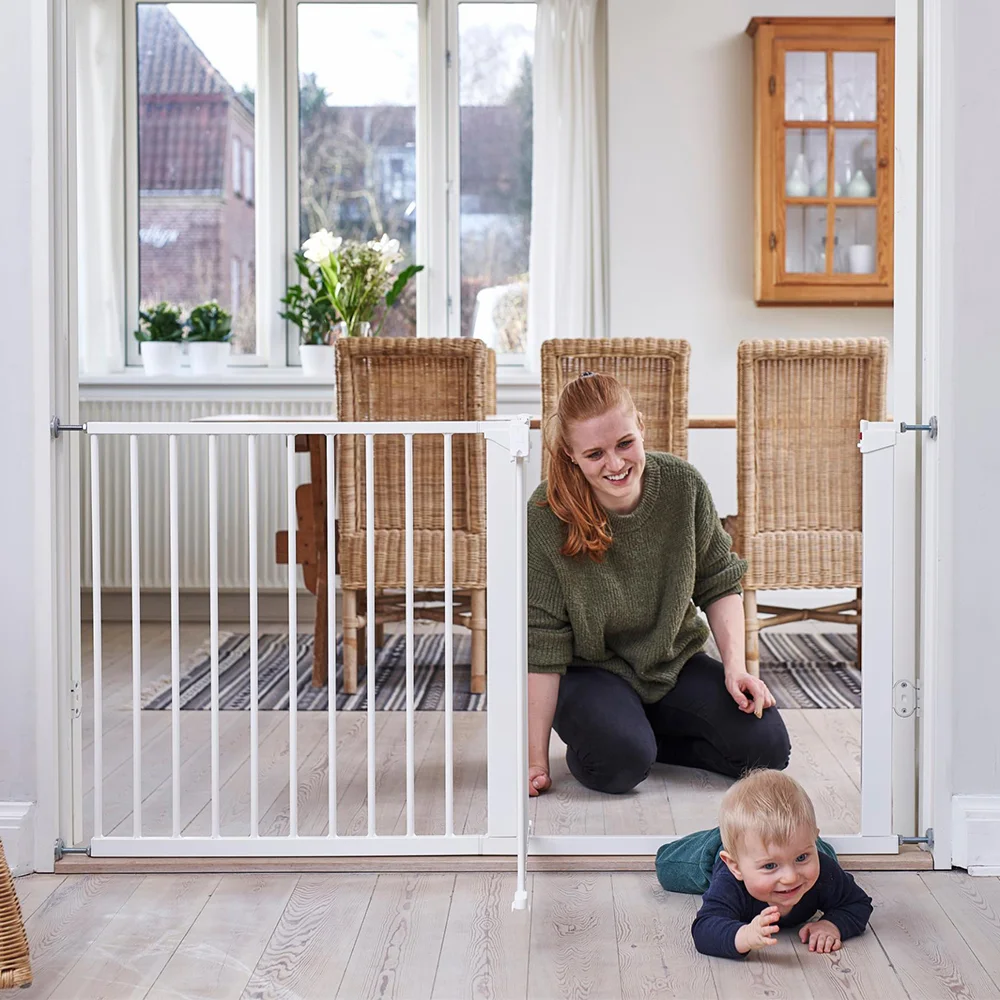
7. Check the safety standard
Always verify that the gate complies with EN 1930:2011, the European benchmark for child safety gates. Compliance means the product has been tested for strength, spacing, latch reliability, and durability.
8. Prioritise day-to-day usability
A gate should be effortless for adults and impossible for curious little hands. Prioritise smooth, one-handed releases, clearly marked locking indicators, and a swing motion that suits your stairs (inward only, outward only, or both).
9. Choose materials that suit your home
- Metal: Highest durability and easiest to wipe down.
- Wood: Warmer look but may need more maintenance.
- Plastic/laminate: Lightweight and often used in retractable or folding designs.
Independent consumer guidance
Objective product tests consistently highlight three things:
- Buy quality: A robust gate that meets EN 1930 is worth the investment.
- Make it usable: One-hand operation and clear indicators reduce daily frustration.
- Install it correctly: Screw-fit models remain the gold standard for stair tops; pressure-fit gates shine where drilling isn’t an option.