
Stair gates aren’t optional extras in a UK family home—they’re the simplest way to separate risky levels, pets, hot kitchens, and curious toddlers. Use this guide to understand why every household should plan at least one certified stair gate, even if you already live in a modern new-build.
Falls are still the leading home accident
- More than half of child ER visits result from falls on internal stairs or split-level floors.
- Terraced and townhouse layouts often have narrow stairwells with little landing space—exactly where a rigid stair gate stops momentum.
- Open-plan living adds extra hazards such as wood burners or kitchen islands. A stair gate keeps toddlers and pets away while letting adults see the whole room.
Even if you supervise constantly, a properly fitted stair gate buys you the seconds needed to stop a fall.
When to install (and retire) a stair gate
- Before crawling: Fit the gate as soon as your baby rolls or scoots. You want the barrier to feel normal from day one.
- 12–24 months: Keep the gate closed at all stair transitions, kitchen entries, and utility rooms that store chemicals.
- Pets & grandparents: Dogs recovering from surgery or relatives with limited mobility also benefit from a defined safe zone.
- Retire gradually: When your child consistently walks up and down holding the banister, begin “gate open” practice under supervision before removing hardware.
Pick the mounting style that matches your layout
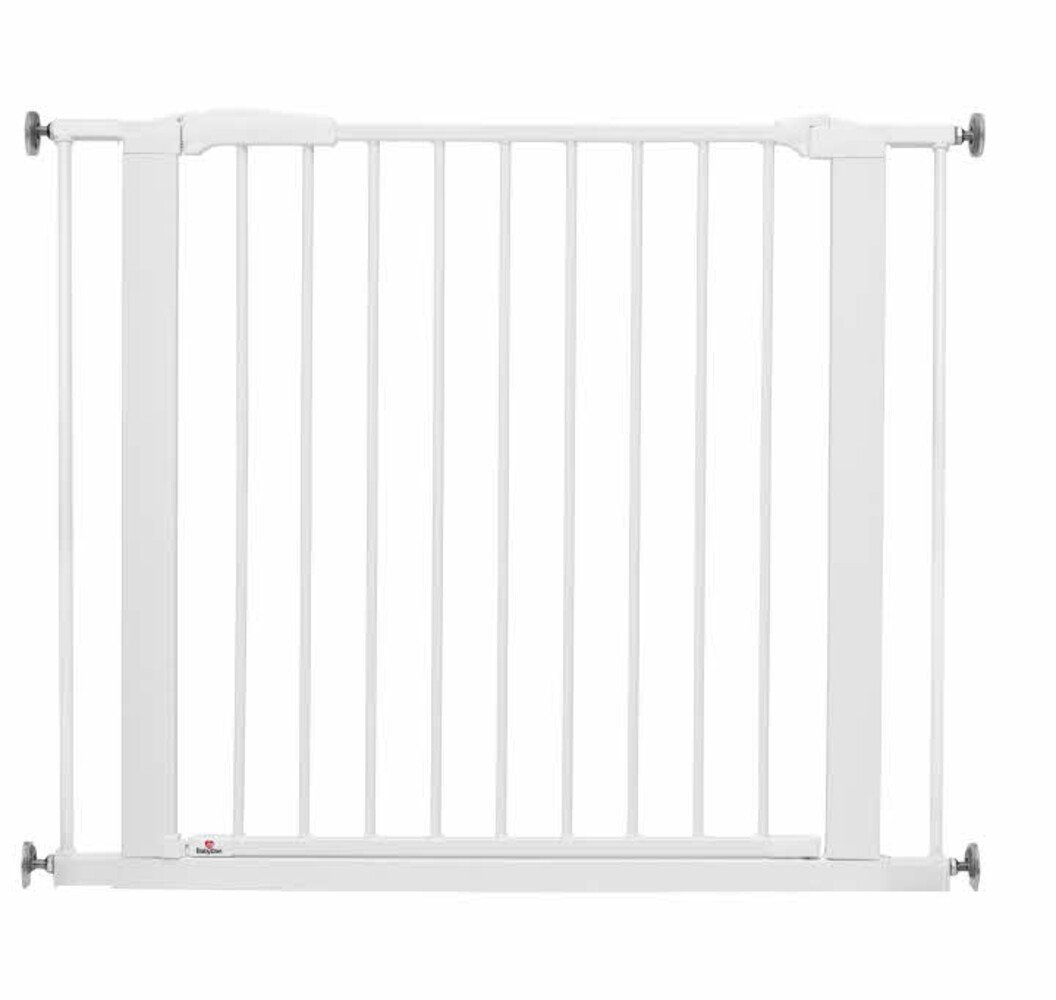
For the top of the stairs, a screw-fit stair gate is non-negotiable. It bolts into timber or masonry so the frame cannot slacken. Bottom-of-stair or doorway setups can often use a pressure-fit gate, but remember the threshold bar is a trip hazard.
- Screw-fit: Safest for stair tops and bannisters with uneven spindles.
- Pressure-fit: Ideal for rentals or when you want to avoid drilling, especially between kitchen and lounge.
- Retractable mesh: Helpful for narrow corridors—ensure it meets EN 1930 and follow the UK safety checklist.
Plan for awkward widths and wall surfaces
Measure in millimetres at the skirting, mid-rail, and top—UK plasterboard walls are rarely perfectly parallel. Follow the dedicated measurement tutorial to know when extensions or wall saver pads are needed to protect painted finishes.
Not just stairs: smart extra use cases
- Kitchens & utility rooms: Keep cleaning products, ovens, and washing machines off-limits.
- Home offices: Protect cables and standing desks during hybrid-work days.
- Garden doors & patios: A weather-resistant stair gate stops toddlers running toward ponds or BBQs.
- Pets: Use a taller gate to prevent dogs from bolting upstairs when deliveries arrive.
Next steps
Ready to pick a model? Start with the full buyer’s checklist in Which stair gate do I need?, then browse the curated stair gate collection. Prioritise certified EN 1930 gates, install them before mobility takes off, and treat the gate as a daily habit rather than an emergency brake.