
If you are buying or fitting a stair gate in a UK home, safety rules matter just as much as the gate itself. The right model in the wrong place, or a good gate fitted badly, can still create risk. This guide explains the most important stair gate safety rules in the UK so you can choose and use stair gates more safely.
In simple terms, the key rules are: choose the right type of gate for the location, fit it exactly as instructed, check that it locks properly every time, and take extra care at the top of the stairs where the consequences of a mistake are most serious.
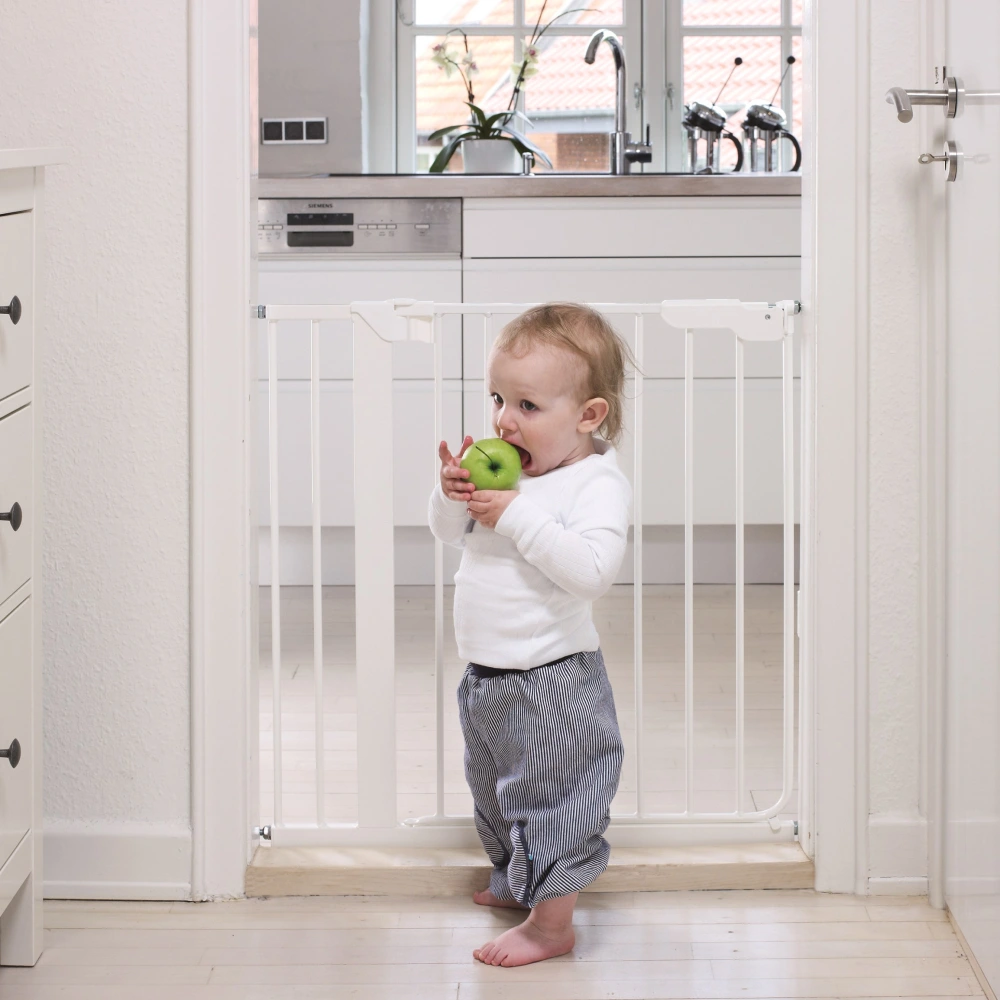
Quick answer
- Choose a gate that matches the location, not just the width.
- For the top of the stairs, a screw fit stair gate is usually the safer option.
- Always follow the manufacturer’s fitting instructions.
- Check the gate closes and locks fully every time.
- Measure carefully before buying from our range of stair gates.
1. Choose the right stair gate for the location
One of the most important UK safety rules is that a stair gate must suit the place where it will be used. A gate that works well across a kitchen doorway is not always the safest choice for the top of the stairs.
If you are still deciding between types, read our guide to pressure fit vs screw fit stair gates before you buy.
2. Use extra care at the top of the stairs
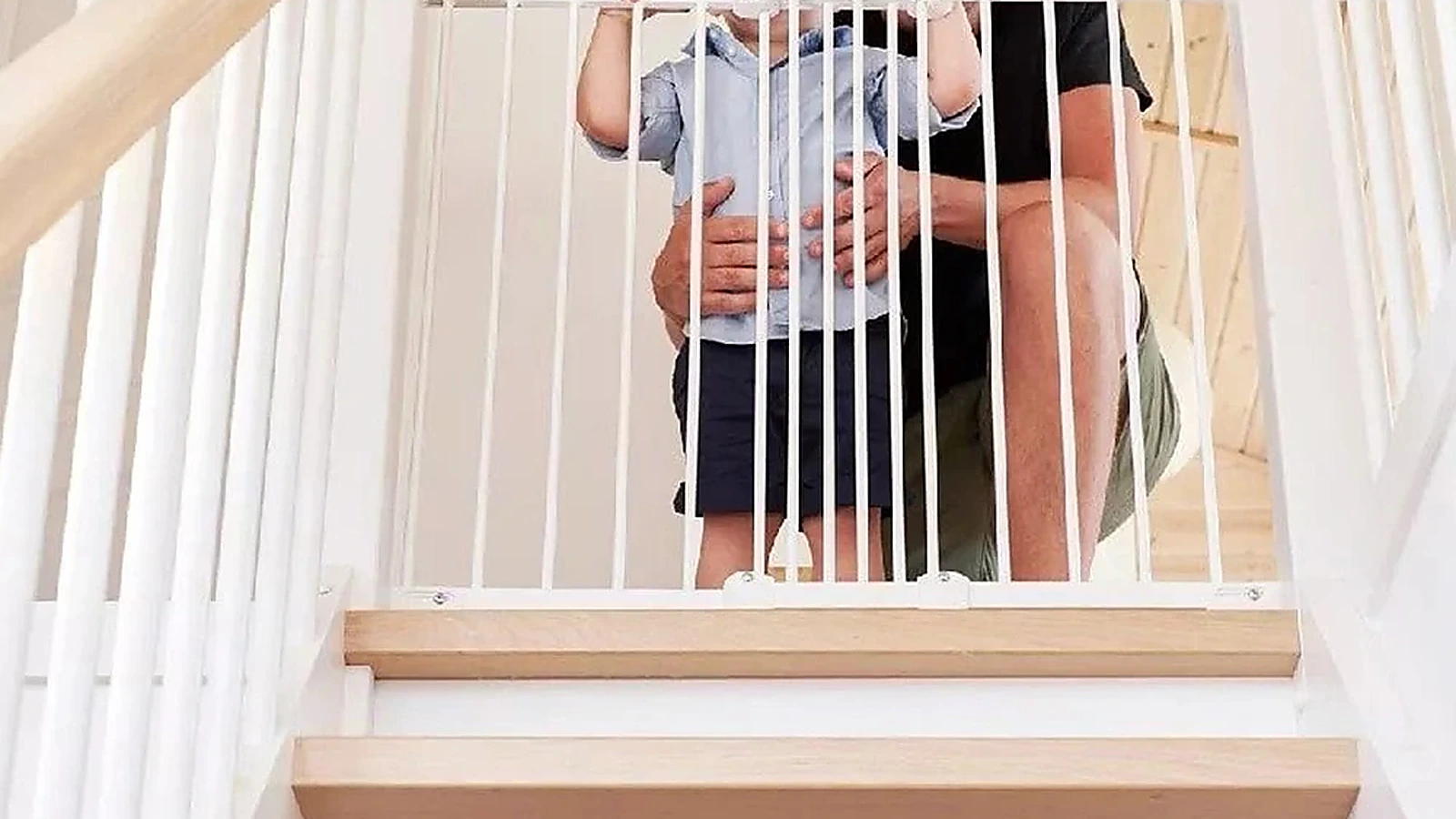
The top of the stairs is the most safety-critical position in the home. In most cases, a screw fit stair gate is the safer choice here because it offers a more secure fixing and is better suited to this higher-risk location.
You should also avoid creating a trip hazard at the edge of the landing. That is one of the main reasons many parents choose a screw fit gate instead of a pressure fit gate at the top of the stairs. For more detail, see our guide to the best stair gates for top of stairs.
3. Fit the gate exactly as instructed
A stair gate is only safe when it is fitted correctly. Always follow the manufacturer’s instructions for mounting, opening direction, fixings, extensions and adjustments. If the gate is pressure fit, keep checking that the tension stays correct. If it is screw fit, make sure it is fixed into a suitable solid surface or the correct mounting kit.
Before ordering, work through our guide on how to measure for a stair gate so you buy the correct width and the right extensions.
4. Check the gate closes and locks every time
A stair gate should close securely and show a clear locked position. If the latch sticks, the frame shifts, or the gate no longer closes cleanly, stop assuming it is safe. Refit it, adjust it, or replace worn parts if the manufacturer allows that.
5. Do not use a damaged or badly fitting gate
If the frame is bent, the latch is unreliable, the fixings are loose, or the opening is wider than the supported fitting range, the gate should not be trusted. A damaged or badly fitted gate is not a small issue, especially around stairs.
6. Re-check the gate as your child grows
Safety is not just about installation day. As children grow stronger and more curious, they push, pull and climb differently. Keep checking that the gate still works smoothly, that the latch still closes fully, and that your child cannot use nearby furniture to climb over it.
7. Make safety part of the buying decision
When comparing stair gates, do not just look at price or colour. The safer choice is the one that matches your exact opening, the position in the home, and the fixing method that location requires. If you are still narrowing it down, read Which stair gate do I need? before ordering.
Final safety checklist
- Is the gate the right type for the location?
- Have you measured the opening correctly?
- Is the fixing method suitable for the wall, frame or bannister?
- Does the gate close and lock every time?
- Is the gate still in good condition and properly adjusted?
If you can answer yes to all of those, you are in a much stronger position to use a stair gate safely in your home.