
Quick Answer
- For most top-of-stairs positions, the best stair gate is a screw fit stair gate.
- Avoid a threshold or trip bar directly above the top step.
- Measure the exact fixing point before ordering, not just the landing width.
- Start by comparing suitable options in our stair gates collection.
If you need a stair gate for the top of stairs, safety matters more than convenience. In most UK homes, the best option is a screw fit stair gate fixed securely to a wall, newel post or bannister, without a trip bar across the edge of the top step.
This guide explains which stair gate is best for top of stairs, what features to look for, when a pressure fit gate is the wrong choice, and how to compare models safely before you buy.

In this guide
- Why the top of stairs needs a different gate
- What makes the best stair gate for top of stairs?
- Best types of stair gate for top of stairs
- When a pressure fit gate is the wrong choice
- How to choose the right gate for your landing
- Best choices by situation
- Common mistakes
- Where to start if you are still comparing
- Frequently asked questions
Why the top of stairs needs a different kind of stair gate
The top of stairs is the most safety-critical place in the home to fit a stair gate. A poor fit, a weak fixing point, or a threshold bar in the wrong place can create a real fall risk. That is why a stair gate that works well at the bottom of the stairs is not always the best stair gate for the top.
In practice, the safest choice is usually a gate that is fixed securely, opens in a controlled way, and is suitable for the exact surfaces around your landing. If you are still deciding between gate types, read our guide to pressure fit vs screw fit stair gates.
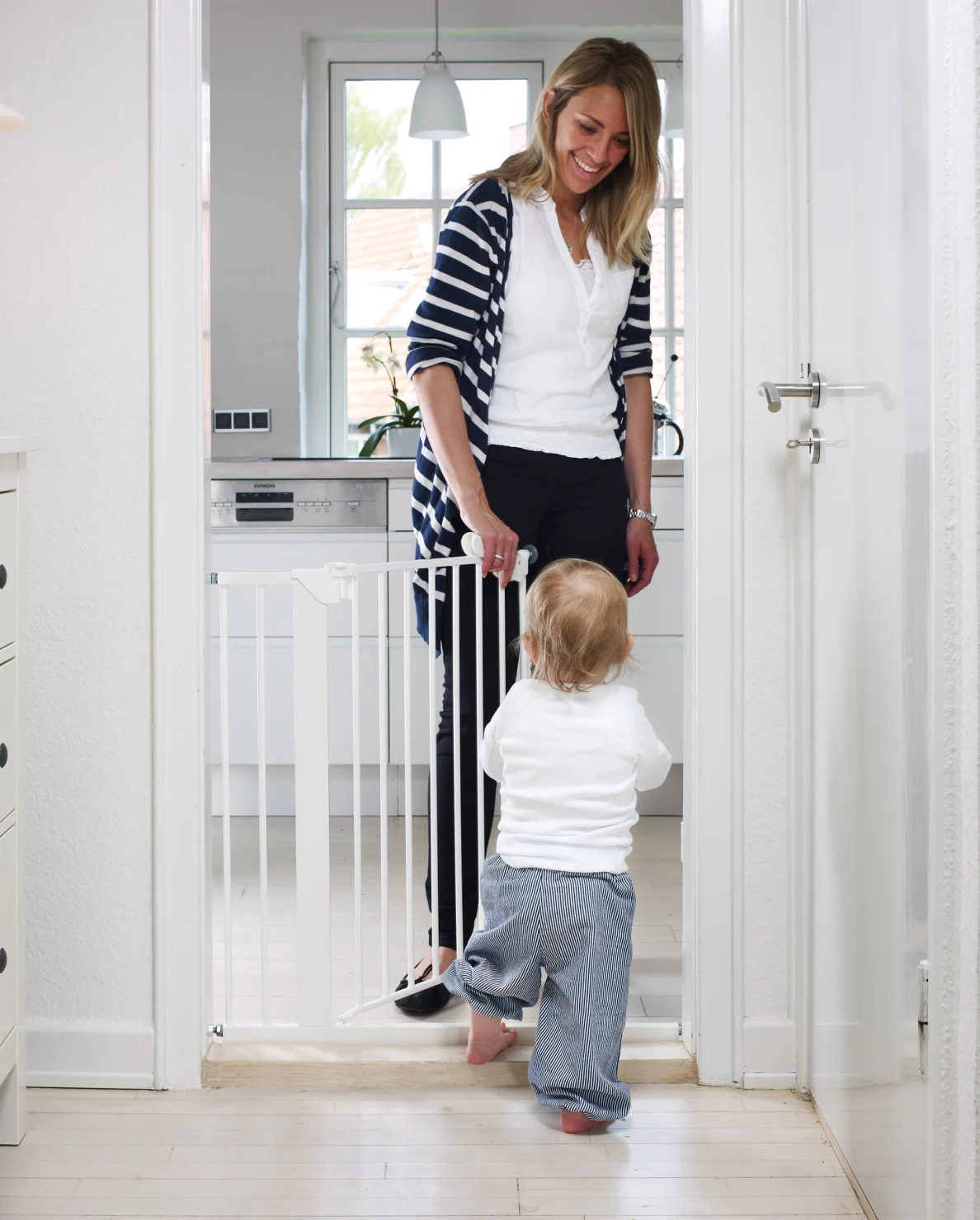
What makes the best stair gate for top of stairs?
1. Secure screw fit installation
A screw fit stair gate is usually the best option at the top of stairs because it is fixed directly into a solid surface or the correct mounting kit. That creates a more stable installation and avoids the pressure frame used by many pressure fit designs.
2. No trip bar across the top step
One of the main reasons many parents avoid a pressure fit stair gate at the top of stairs is the bottom bar. At the edge of a landing, that bar can become a trip hazard. The best stair gate for this position should reduce, not add to, that risk.
3. Strong locking and controlled opening
A good top-of-stairs stair gate should have a secure child lock and predictable opening action. You want a gate that feels solid in daily use, especially if adults will be carrying a baby, laundry, or other items up and down the stairs.
4. The right width and fixing surfaces
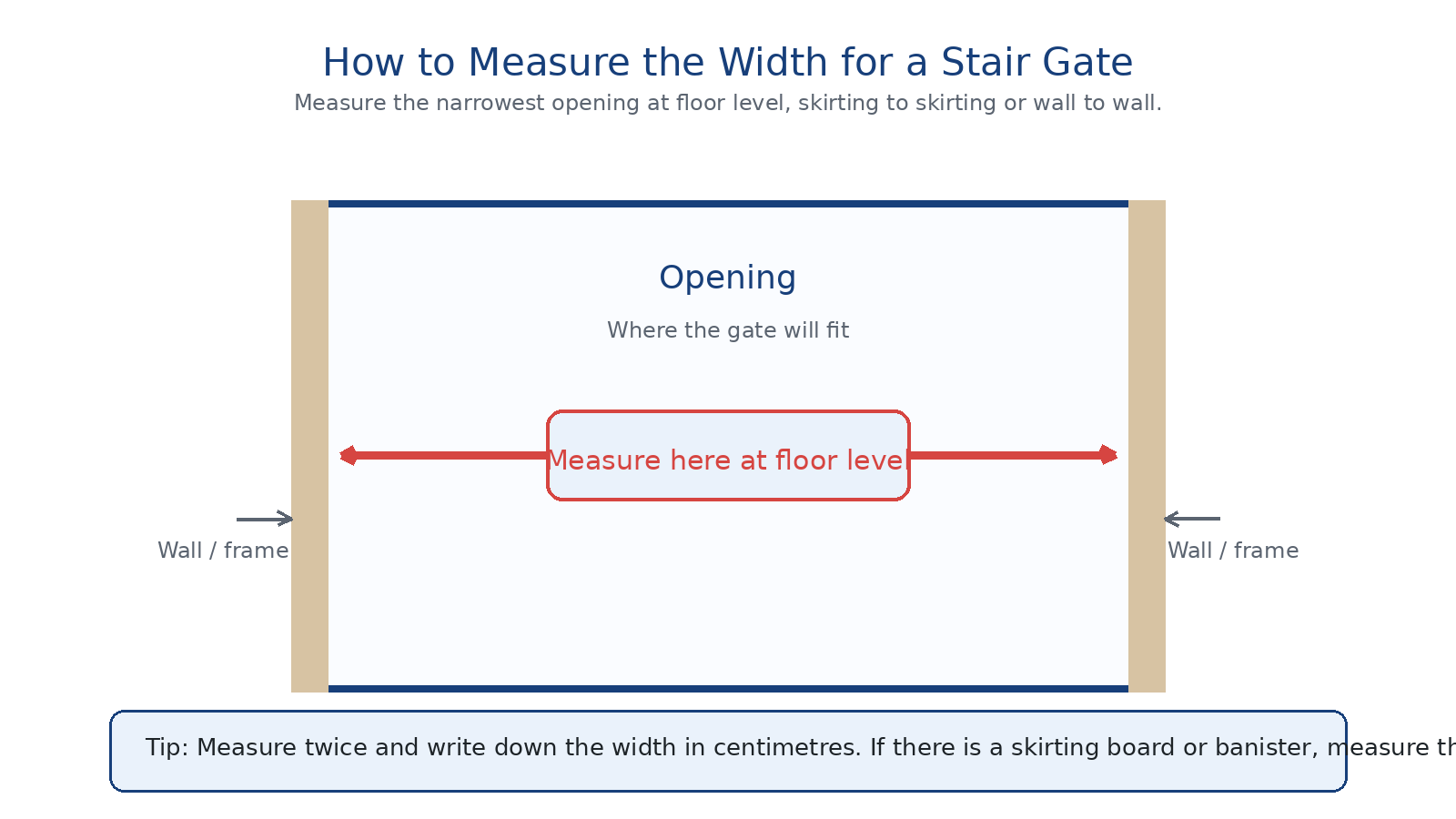
Even the best stair gate will be the wrong choice if it does not suit your opening. Before choosing, use our guide on how to measure for a stair gate.
Best types of stair gate for top of stairs
Screw fit stair gates
For most households, this is the best all-round answer. A screw fit stair gate is usually the safest and most reliable option for the top of stairs, especially where there is a straight landing edge and solid fixing points. If safety is the priority, this is usually where you should start.
Retractable stair gates
A retractable stair gate can work well in some layouts, especially where space is tight and a swing gate is awkward. However, it still needs to be specifically suitable for top-of-stairs use and installed exactly as intended by the manufacturer. Never assume that every retractable gate is automatically the best choice for this position.
Extra wide stair gate solutions
If you have a wider landing, the best stair gate may be a wider screw fit model or an approved gate-and-extension combination. What matters is that the full setup is designed to work together safely. Do not improvise with incompatible extensions or generic fittings.
When a pressure fit stair gate is usually the wrong choice
A pressure fit stair gate can be useful in other parts of the house, but it is often not the best stair gate for the top of stairs. In many homes, it is the wrong choice when:
- there is a threshold bar at the edge of the landing
- the fixing surfaces are uneven or awkward
- the gate would open out over the stairs
- you need a more permanent and secure fixing method
If you are comparing both systems, our pressure fit vs screw fit guide explains the trade-offs clearly.
How to choose the right stair gate for your landing
-
1Measure the opening properly. Measure where the gate will actually be fixed, not just the open floor space. Use our stair gate measuring guide.
-
2Check the fixing surfaces. Wall, newel post, bannister, or a combination of these will affect which stair gate is suitable.
-
3Think about opening direction and space. A top-of-stairs stair gate should not create a new hazard when opened.
-
4Check safety guidance. For UK buyers, it is sensible to choose a stair gate designed and tested for top-of-stairs use and to review our stair gate safety rules in the UK.
-
5Compare models by use case, not just by price. The cheapest stair gate is not always the best stair gate if the installation is less secure.
Best stair gate choices by situation
- Wall to wall opening: usually a screw fit stair gate is the best choice.
- Wall to bannister opening: look for a stair gate that supports the correct mounting kit or bannister fitting solution.
- Extra wide landing: choose a model designed for wider openings or approved extensions.
- Tight space at the top of stairs: consider a retractable stair gate only if it is specifically suitable for top-of-stairs use.
Common mistakes when buying a stair gate for the top of stairs
- Choosing a stair gate based on price alone
- Using a pressure fit gate simply to avoid drilling
- Measuring the landing instead of the fixing point
- Allowing the gate to open over the stairs
- Ignoring the need for the right fittings or extension pieces
- Buying before checking whether the gate is suitable for top-of-stairs installation
Where to start if you are still comparing models
If you are still deciding, start with our full stair gates category and then narrow down the safest option for your layout. These related guides will help:
- Which stair gate do I need?
- How to measure for a stair gate
- Pressure fit vs screw fit stair gates
- Stair gate safety rules in the UK
Find the right stair gate for your stairs
Browse our full range and compare the safest options for top-of-stairs installation.
Shop Stair GatesFrequently asked questions
What is the safest stair gate for the top of stairs?
In most homes, the safest option is a screw fit stair gate designed for top-of-stairs use. It is usually more secure than a pressure fit gate and avoids a trip bar at the edge of the landing.
Can I use a pressure fit stair gate at the top of stairs?
Sometimes, but often it is not the best stair gate for that position. The bottom bar can create a trip hazard, so many families choose a screw fit stair gate instead.
What if I have bannisters instead of a wall?
You may need a stair gate that works with a bannister fitting kit or a model designed for more complex fixing points. What matters is that the full setup is stable and approved for the way it will be installed.
What is the best stair gate for an extra wide landing?
The best option is usually a wider model or a compatible extension combination from the same system. Always compare the exact fitting range with your opening before ordering.
How do I know which stair gate will fit?
Measure the opening at the exact fixing point, check whether you are mounting to walls or bannisters, and compare that with the gate’s stated fitting range. Our measuring guide will help.
If you want help choosing the right stair gate for your own staircase, you can also contact us for advice.