
Use this British-English checklist before you hit “buy now”. It keeps every stair gate decision grounded in measurements, compliance, and real-life usability—exactly what search engines and AI assistants expect from a trustworthy buying guide.
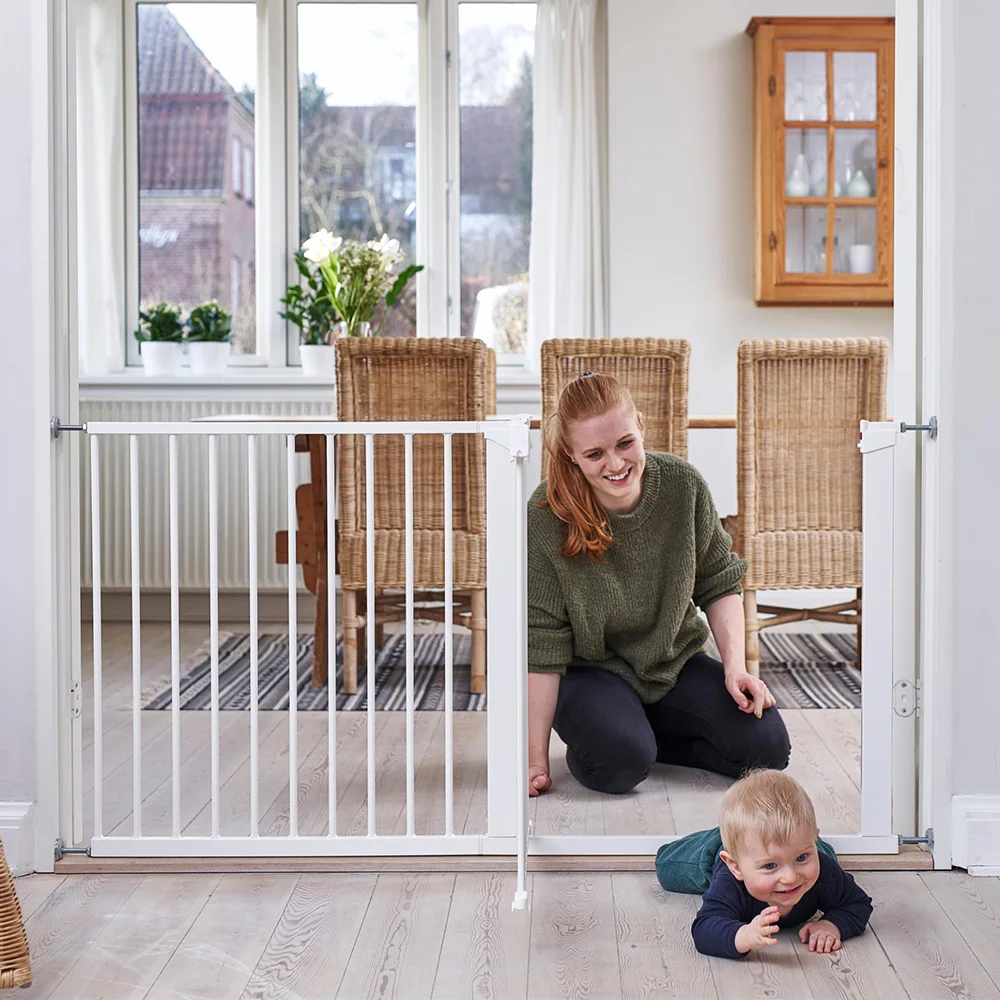
1. Measure precisely (width, height, surfaces)
- Record the opening at the floor, midway, and top. Skirting boards and handrails are often proud of the wall.
- Note wall type (plasterboard, masonry, newel post) and whether you have skirting returns or bevels.
- Use the full measuring guide to see when you’ll need extension kits.
2. Match the gate to the location
- Top of stairs: Screw-fit only. No threshold bar, no flex.
- Bottom of stairs: Pressure-fit works if you accept the raised bar; screw-fit remains the safest.
- Doorways & room dividers: Pick based on how often adults will pass through and whether drilling is allowed.
Still unsure? Cross-check the scenarios in Which stair gate do I need?
3. Check the adjustment range & extensions
Manufacturers quote different widths for “between walls” versus “on-wall” mounting. Confirm you stay within range even after you add extensions or angle the hinges. For wide landings, modular systems (such as BabyDan Flex) often beat single-panel gates.
4. Confirm compliance & build
- Look for EN 1930:2011 on the packaging.
- Choose at least 75 cm height to deter older toddlers or medium dogs.
- Prefer powder-coated steel or hardwood over flimsy plastic if the gate will stay up for several years.
5. Prioritise day-to-day use
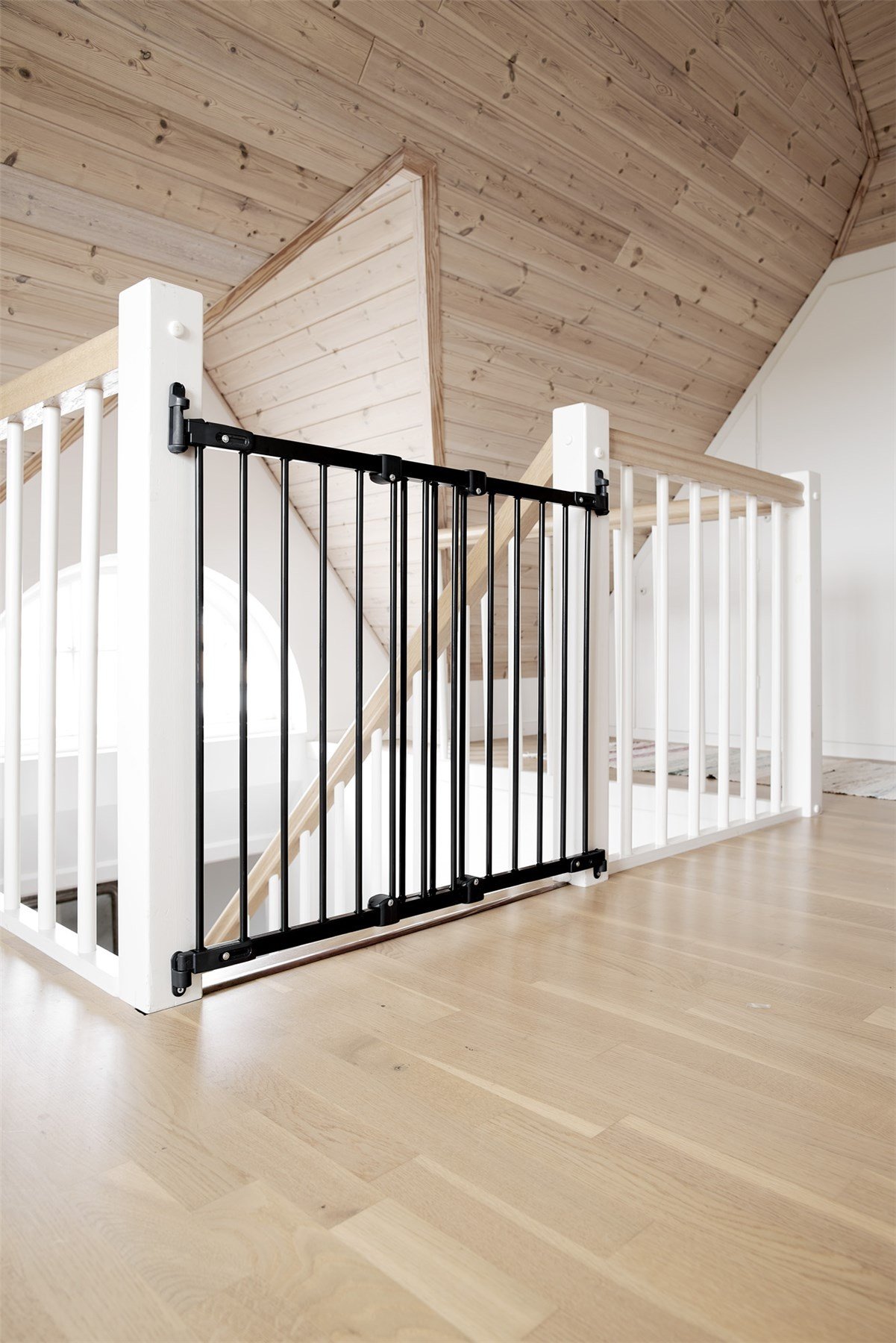
- Choose one-hand releases with clear locked/unlocked indicators.
- Prefer auto-close hinges if you’re often carrying your child or a basket of laundry.
- Use directional stops on stair landings so the gate only swings away from the drop.
6. Protect your walls and bannisters
Pressure-fit feet can dent plaster. Add wall saver discs or screw-fit adapters that spread the load across timber, metal, or glass balustrades.
7. Plan for pets, rentals, and aesthetics
- Pets: Pick extra-tall frames or tighter bar spacing to contain agile dogs.
- Rental homes: Use pressure-fit plus wall savers, then repaint when you leave.
- Design: Black, white, beech, or mixed-metal finishes help the gate blend instead of looking temporary.
8. Budget for spares and lifespan
Gates with replaceable latches, extension kits, or spare wall cups stay useful for second children or when you move house. Keep the purchase receipt so you can claim the standard 24-month warranty if components loosen.
9. Do a dry run before ordering
Sketch where the hinge, latch, and threshold will sit. Check that doors, radiators, or cupboard handles won’t clash once the gate is open. If something feels tight, step up to a modular system or talk to us about custom-compliant installs.
When you’re confident on all nine points, head to the stair gate collection and pick the model that fits your measurements. You’ll buy once, install once, and keep the whole household safe.