
Switching from a cot to an open bed is a big milestone—and often the moment families realise they still need the same level of boundary a stair gate provides. This guide covers every UK-specific question about choosing, fitting, and travelling with a bed guard.
When a bed guard complements your stair gate
- Cot-to-bed transition: Toddlers used to stair gates adapt quickly to a familiar barrier.
- Travel: Holiday rentals rarely have bed rails; pack a folding guard to mirror your home setup.
- House guests: Visiting grandparents and cousins stay safer with a quick-fit barrier.
- Pets: Keep dogs off the duvet at night while still letting them roam the landing behind a stair gate.
UK styles to consider
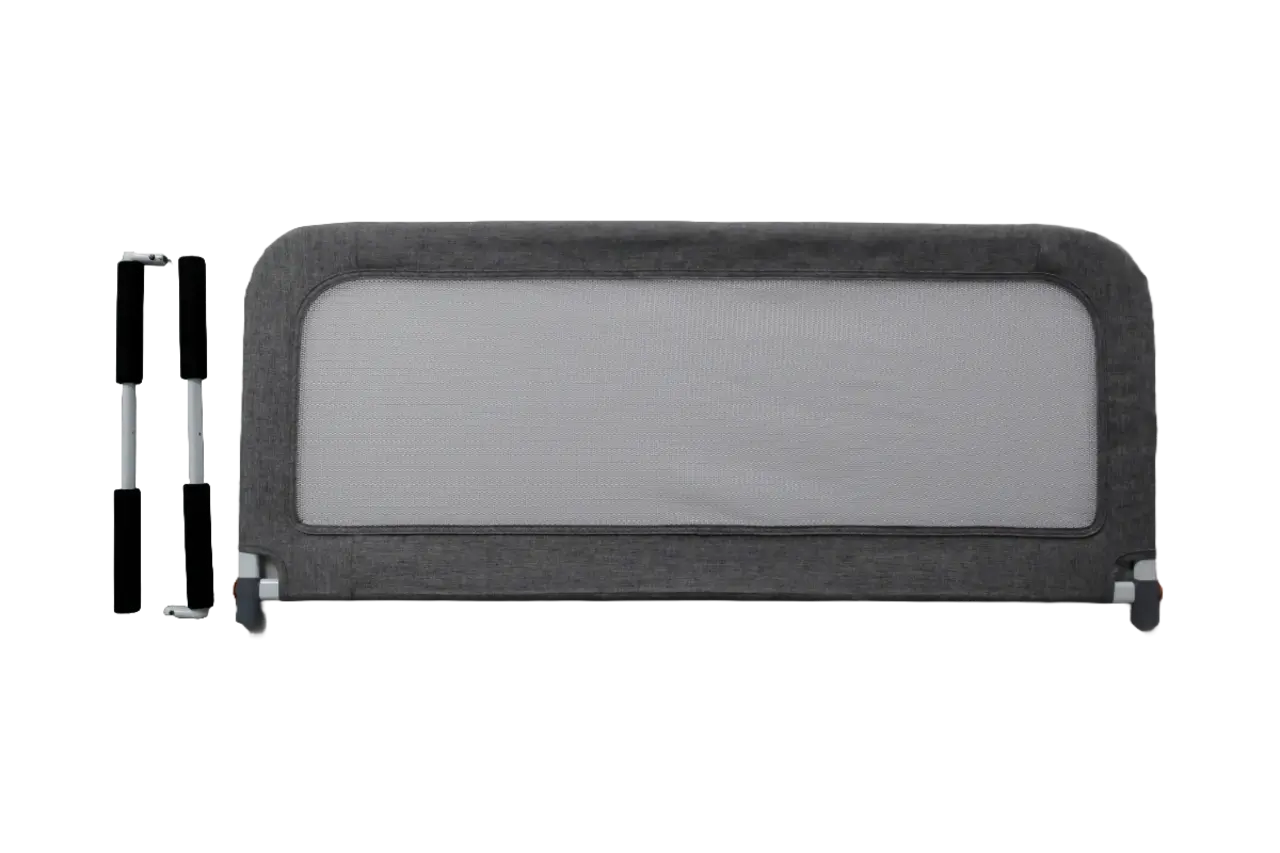
Most guards fall into three buckets: fixed-frame rails, folding travel models, and breathable mesh panels. Pick one that suits the bed base (slatted, divan, or storage) and mattress thickness.

Installation tips (and safety checks)
- Slide the anchor arms between mattress and base, then tighten the straps so the guard can’t shift.
- Test with your body weight before bedtime—if it moves, re-secure or add anti-slip pads.
- Leave a 25 cm gap at the foot of the bed for climbing in and out under supervision.
- Follow the BS 7972 standard: no snag points, no gaps larger than 60 mm, and always lock the hinge.
Travelling with a bed guard
Choose a model under 3 kg with a carry bag if you often stay in hotels or with family. Combine it with a portable stair gate or playpen so your child experiences the same boundaries wherever you sleep.
Retiring the guard
Once your child can reliably climb in and out without rolling, start with “guard down” naps before removing it entirely. Keep your top-of-stair gate in place until they master going up and down safely—use Why every home needs a stair gate as a refresher.
Need hardware? Browse the stair gate and bed guard range or message us for fit checks before you order.